-
My studio is where the magic happens — the place where I bring my designs to life, turning sketches into finished pieces. It’s a space that constantly inspires me to explore, create, and refine my craft. Surrounded by light, texture, and the quiet rhythm of making, my studio has become more than just a workspace; it’s a reflection of my creative energy and the heart of my artistic process.
Located at Sterling Road, next to the Auto Building — home to Toronto’s Museum of Contemporary Art — the studio sits at the heart of one of the city’s most vibrant creative communities. Surrounded by fellow artists, specialty craft studios, and contemporary art spaces, it offers an environment rich in inspiration and collaboration. I believe that our surroundings shape the way we create, and being immersed in such a dynamic and diverse setting continually motivates me to pursue new ideas and push forward with my creative projects and artistic growth.
-
My design process is guided by exploration, experimentation, and craftsmanship. Each project begins with sketching, where initial ideas are captured and developed into visual concepts. These early drawings allow me to explore form, proportion, and detail while shaping the overall direction of the piece. From there, I move on to creating a prototype model, a scaled physical version that helps me better understand how the design will exist in three dimensions. This stage allows me to refine proportions, test materials, and evaluate the balance between form and function. Once the design has been carefully considered, I begin the creation process, where the final piece is constructed with attention, patience, and technique. Through each stage—from shaping and refining to firing and finishing—the work gradually comes to life. The result is the finished product, a piece that reflects the full journey of the design process and the dedication invested in bringing the original idea into reality.
Sketching:
Every design begins with an idea. Inspiration can appear anywhere—sometimes sparked by a moment of observation, and other times arriving unexpectedly. Because of this, I always keep a sketchbook close at hand. It’s where I capture those first sparks of creativity and begin shaping them into something tangible.
Sketching allows me to explore and refine each concept, helping me visualize not only how a piece will look, but how it will feel. I pay close attention to every detail—from form and texture to color and subtle sensory elements that give a design its unique character.
Prototype Model:
Once a design has been finalized through sketches, I move on to creating a scaled prototype to explore how the piece will exist in physical form. This stage allows me to study proportions, textures, and the overall presence of the design before committing to the final scale.
While designers often use materials such as cardstock, foam, or 3D prints to prototype their work, I prefer working with smaller versions of the actual materials—such as ceramics, wood, or metal—when modeling my vessels. This hands-on process helps me better understand the relationship between form and function, and how each curve or surface detail contributes to the final piece.
Creation Process:
Once I’m satisfied with the prototype, I begin assembling the vessel itself. The experience and insights gained from creating the miniature model allow me to approach the full-scale piece with greater confidence, precision, and intention. Each stage becomes both a continuation of the design process and an opportunity to refine my technique.
For an example, ceramics is an art form that requires patience and rhythm. From shaping the initial form, allowing the piece to dry completely, to bisque firing, glazing, and the final glaze firing—each step demands time, care, and attention. Though the process is slow, it is deeply rewarding and reveals the beauty of craftsmanship through dedication and practice.
Finished Product:
Once the final touches are complete, the vessel is ready to be enjoyed—a finished piece that reflects the care, creativity, and effort invested throughout the entire process.
-
Isamu Noguchi
Isamu Noguchi stands as one of the most influential figures in contemporary art, design, and architecture. His innovative creations and the museum dedicated to his work have significantly shaped my understanding of design principles and their emotional resonance. Noguchi’s lifelong dedication to his craft established a legacy that continues to inspire designers and artists today.
Roth Azulik
Roth Azulik is a self-taught architect and the founder of Azulik, a luxury eco-resort in Tulum, Mexico. His work extends beyond hospitality projects like resorts and restaurants to include art museums, retail spaces, and wellness centers. Through his out of this world designs, Azulik aims to harmonize people with nature and create immersive, holistic experiences that engage all the senses.
Nayra Iglesias
Nayra Iglesias is a Spain-based architectural designer and the founder of In Out Studio, a firm specializing in architecture and interior design. Her creative approach is guided by sensuality, emphasizing the interplay of texture, scent, light, and sound to create immersive spatial experiences. Iglesias’s designs engage the senses, transforming spaces into environments that feel warm and as captivating as they look.
Chiharu Shiota
There’s something quietly arresting about Chiharu Shiota’s work—how she transforms something as simple as thread into an immersive, emotional landscape. Her red string installations feel like living memories, tangled yet intentional, mapping absence, connection, and time. Experiencing them made me rethink the potential of everyday objects; she doesn’t just use materials, she elevates them into vessels of meaning. It inspired me to see simplicity not as limitation, but as a starting point for something deeply expressive and poetic.
-
Clay Bodies
Black Clay:
Black clay is a dark-bodied clay known for its rich tone and dramatic visual presence. The deep color comes from minerals such as iron or manganese. It is often used for decorative vessels and sculptural pieces because the dark surface highlights texture, form, and contrasting glazes.
Raku Clay:
Raku clay is designed to withstand the intense thermal shock of Raku firing. It contains grog or sand which strengthens the clay body and prevents cracking during rapid heating and cooling. Raku clay is commonly used to create pieces with smoky surfaces, metallic finishes, and crackled glazes.
Stoneware Clay:
Stoneware is a durable and versatile clay body that becomes very strong when fired at high temperatures. It has a slightly coarse texture and is commonly used for functional ceramics such as bowls, plates, mugs, and vases.
Porcelain:
Porcelain is a refined, smooth clay known for its delicate appearance and strength when fired. It produces thin, elegant forms and often has a translucent quality when light passes through it. Porcelain is valued for fine ceramic work and detailed craftsmanship.
Surface Materials
Glaze:
Glaze is a mixture of silica, minerals, and colorants that is applied to ceramics before firing. When heated in the kiln, the glaze melts and forms a glass-like coating that protects the surface and adds color, texture, or shine.
Underglaze:
Underglaze is used to add color and decorative designs to ceramic surfaces before the final glaze layer is applied. It allows artists to paint detailed imagery, patterns, and illustrations onto clay.
Slip:
Slip is a liquid mixture of clay and water used for decorating, casting, or joining clay pieces together. It acts as a bonding agent between clay surfaces and can also create layered textures or colored finishes.
Engobe:
Engobe is similar to slip but contains additional minerals and pigments. It is often used to add colored coatings to clay surfaces while maintaining the natural texture of the clay body.
Structural Materials
Grog:
Grog is crushed, pre-fired clay that is added to clay bodies to increase strength and reduce shrinkage during firing. It also improves the clay’s ability to hold larger or more sculptural forms.
Kiln Wash:
Kiln wash is a protective coating applied to kiln shelves to prevent glaze from sticking during firing. It helps protect kiln equipment and allows pieces to be removed easily.
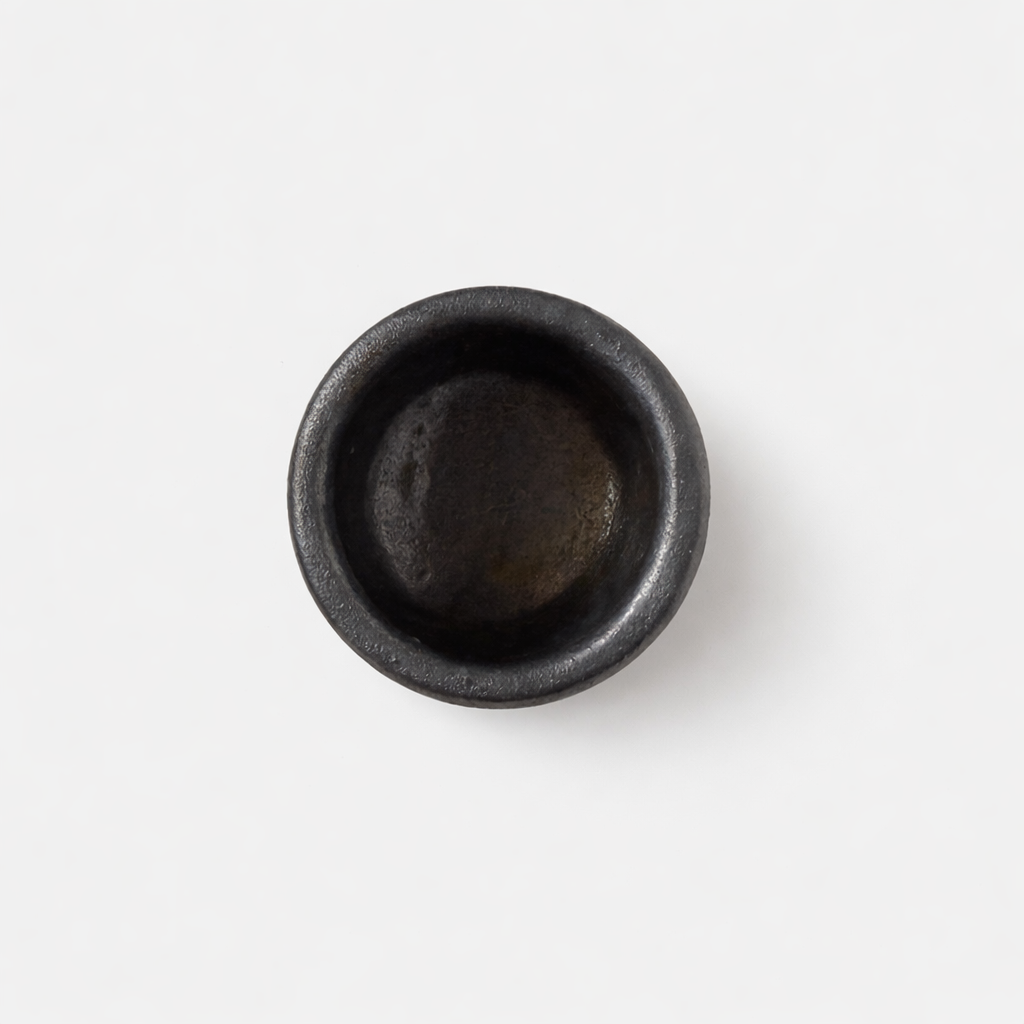
STONEWARE
A brutalist-inspired stoneware collection defined by raw form and tactile, stone-like texture.